Yogyakarta – The Master in Food Science and Technology (MFST) programme at the Faculty of Agricultural Technology, Universitas Gadjah Mada (UGM), has been awarded Excellent (Unggul) accreditation by Lembaga Akreditasi Mandiri Pendidikan Tinggi Ilmu Pertanian (LAM PTIP), the independent accreditation agency for higher education in agricultural sciences, with a score of 379.63. The accreditation is valid for five years, from 6 July 2026 to 5 July 2031.
The award is stipulated in LAM PTIP Decision No. 051/SK/LAMPTIP/Ak.U/Mg/VIII/2026, issued on 24 August 2026. This achievement provides external recognition of the programme’s equality and an opportunity to further strengthen research-based education, international collaboration, and contributions to society.
Site Assessment and a Shared Commitment
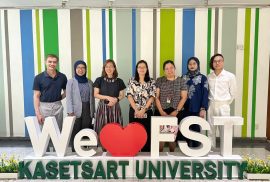
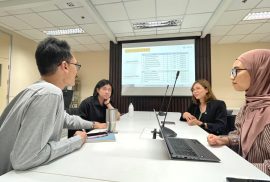
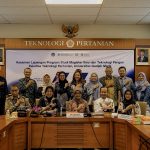
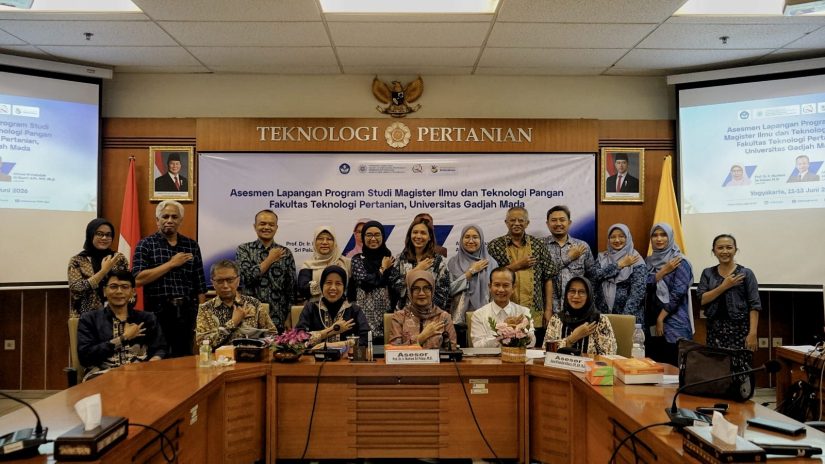
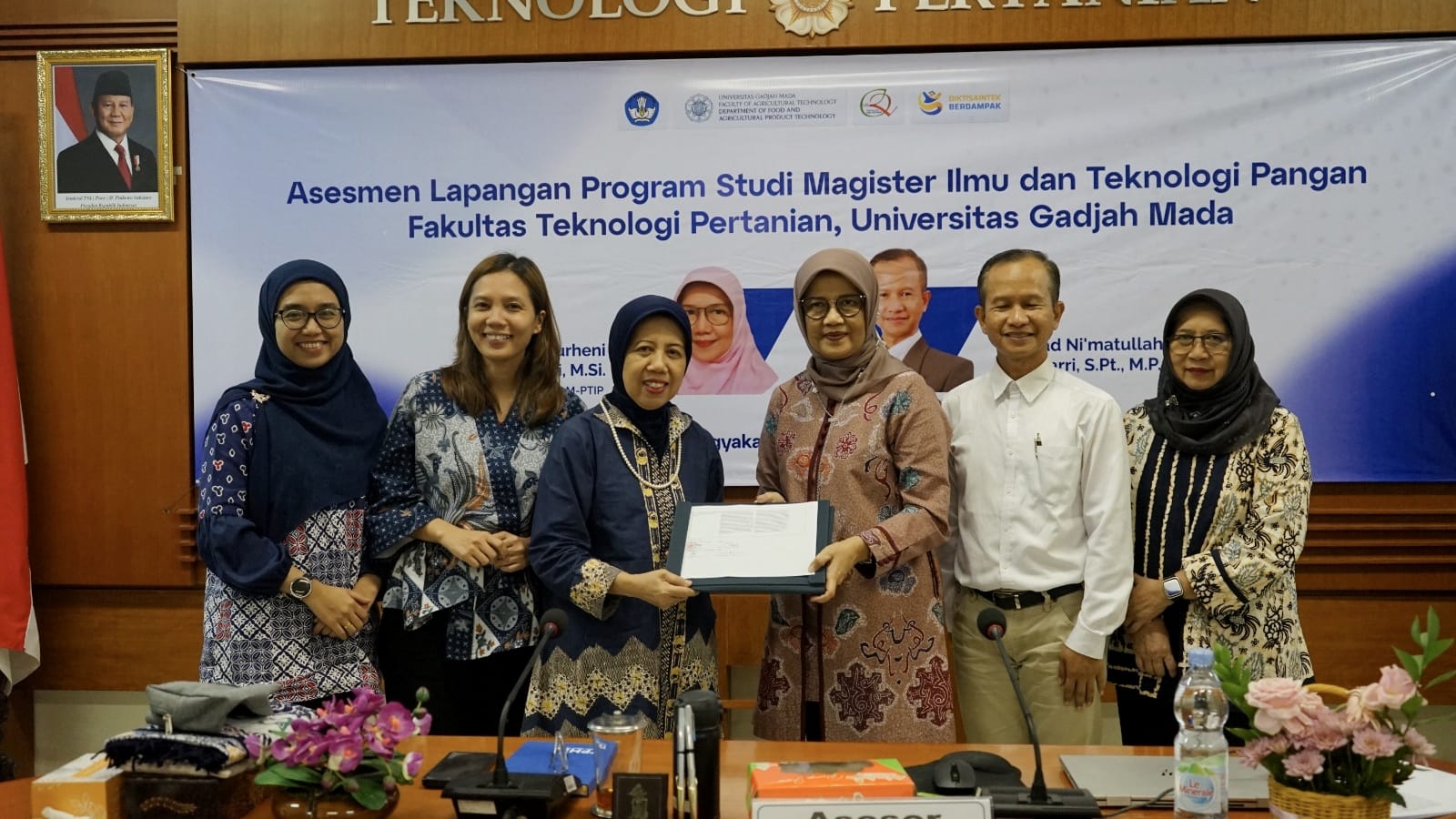
The accreditation award followed a site assessment held on 11-13 June 2026 at UGM’s Faculty of Agricultural Technology. The visit brought together the assessors, faculty leadership, academic staff, programme management, and the accreditation task force. Their participation highlighted a shared responsibility for programme quality, extending from faculty leadership to those involved in day-to-day academic activities.
The Self-Evaluation Report submitted for accreditation addressed four main criteria: quality culture; the relevance of education, research, and community service; accountability; and mission differentiation. Within this framework, MFST UGM demonstrated the connections between its strategic direction, programme implementation, performance achievements, and benefits for stakeholders.
The programme management’s involvement in the visit also formed part of an ongoing evaluation process. At MFST UGM, findings from learning monitoring, self-evaluation, and internal quality audits are discussed in academic forums and management review meetings to identify priorities for improvement. Accreditation is therefore part of continuous quality enhancement rather than a stand-alone activity.
The Collaborative Effort Behind the Achievement
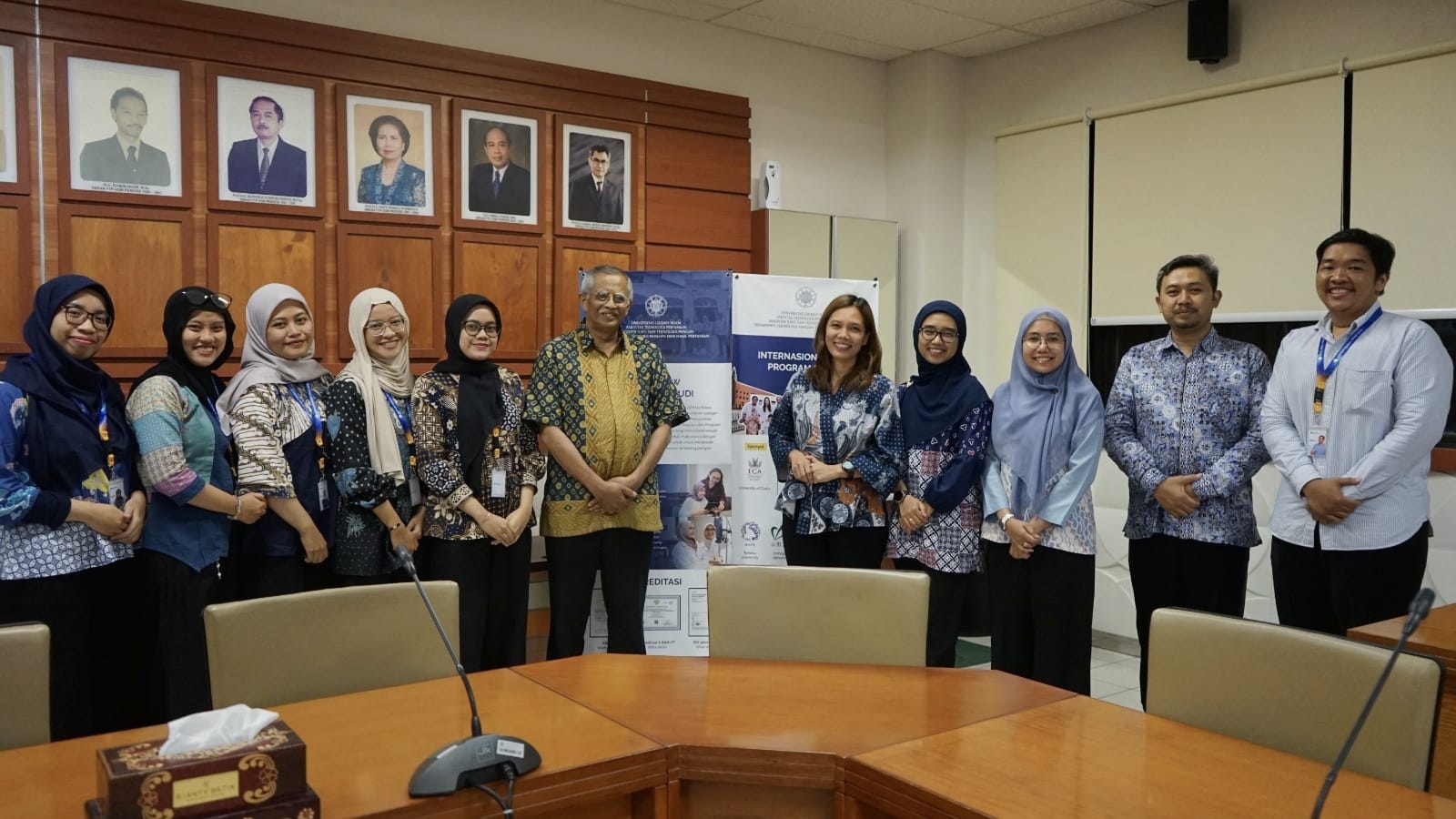
Accreditation preparation involved faculty leadership, the Department of Food and Agricultural Product Technology, the Quality Management Unit, programme management, academic staff, and professional support staff. The document preparation team was chaired by Dr. Widiastuti Setyaningsih, S.T.P., M.Sc., with Dr. Qurrotul A’yun, S.T.P., M.Sc., serving as deputy chair. Responsibilities were assigned to ensure comprehensive coverage of each criterion, complete supporting evidence, and readiness for assessment.
The team’s work included collecting academic data, publication records, partnership documentation, community service reports, survey results, and quality assurance records. Information was cross-checked across the programme, department, and faculty to ensure consistency and traceability. Feedback from students, alumni, graduate employers, and partners also informed the evaluation and the programme’s development priorities.
Behind the documentation was a repeated process of coordination, review, and refinement. The task force and professional support staff contributed to data management and documentation, complementing the work of academic staff and institutional leaders in strengthening the academic substance of the submission. This collaboration reflected the quality culture underpinning the accreditation achievement.
Strengthening Research-Based Education and Societal Benefits
MFST UGM promotes research-based education with an international outlook and a focus on sustainable food innovation. Through both the regular and by-research tracks, students develop the ability to formulate research problems, apply scientific approaches, analyse data, and communicate their findings. Internationalisation supports both tracks through access to global scientific literature and the development of scholarly outputs.
Research competencies are strengthened progressively through research methodology courses, proposal development and examinations, progress seminars, thesis supervision, and manuscript support. Partnerships with institutions including the University of Cádiz in Spain and Prince of Songkla University in Thailand also support joint supervision, collaborative publications, and student mobility opportunities.
This research orientation extends to community service. Support for micro, small, and medium enterprises, the strengthening of quality management and food safety systems, and the diversification of locally based food products connect academic expertise with community needs. The integration of education, research, and community service reinforces MFST UGM’s identity in developing relevant and sustainable food innovations.
MFST UGM extends its appreciation to everyone who supported the accreditation process: university and faculty leadership, the department, the Quality Management Unit, the task force, academic and professional support staff, laboratory managers, students, alumni, graduate employers, and partners.
The programme also thanks the LAM PTIP assessors for conducting the assessment as part of external quality assurance.
Excellent accreditation is not the endpoint of programme development, but a foundation for further improving learning quality, expanding collaboration, and increasing the benefits of research. The collective commitment demonstrated throughout the preparation and site assessment will continue to support high-quality, relevant, and impactful postgraduate education in food science and technology.