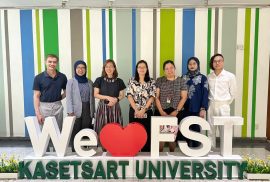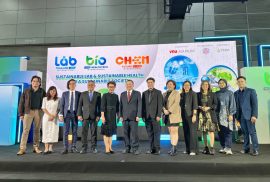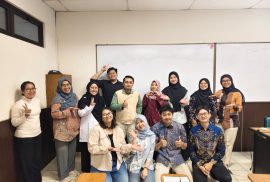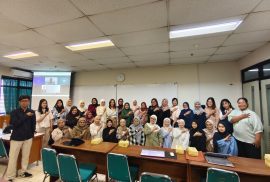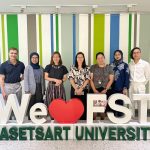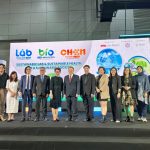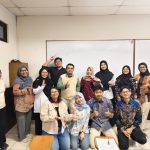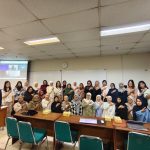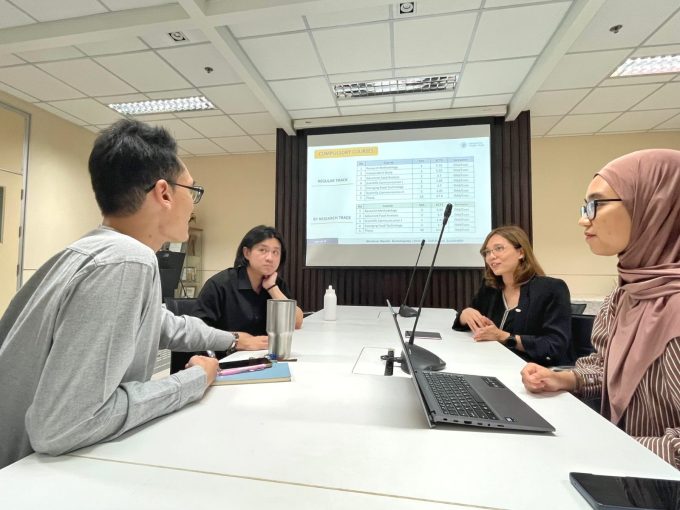
The Master’s Programme in Food Science and Technology (MFST), Faculty of Agricultural Technology, Universitas Gadjah Mada (UGM), visited the Department of Food Technology, Faculty of Science, Chulalongkorn University, in Bangkok, Thailand in September 1, 2026. The visit explored research collaboration, joint supervision, and student mobility opportunities to broaden the international academic experience of UGM’s MFST students.

The UGM representatives were welcomed by Assoc. Prof. Dr. Kitipong Assatarakul, Head of the Department of Food Technology, and Dr. Sumate Keratimanoch, coordinator of the master’s programme. Discussion covered the compatibility of academic programmes, faculty expertise, and opportunities to draw on complementary research facilities at the two institutions.
Chulalongkorn University expressed its openness to research collaboration and to hosting UGM students for research activities. As an initial step, the two sides discussed joint supervision and research exchanges. Developing these activities will require matching research interests and faculty expertise across the two universities, with Dr. Sumate Keratimanoch helping to facilitate initial communication.
The meeting also addressed funding opportunities for incoming international students at Chulalongkorn University. As places for financial support are limited, preparing applications well in advance is important. For UGM’s MFST students, these opportunities could support part of their thesis research abroad while helping them build connections with researchers in Thailand.

The delegation also toured laboratory facilities and food processing equipment. The tour provided first-hand insight into Chulalongkorn University’s research capabilities and helped identify facilities that could support collaborative projects. The department’s expertise spans food processing and engineering, food chemistry, product development, food microbiology, packaging, and nutrition, offering several areas of potential collaboration relevant to UGM faculty research and master’s theses.
The possibility of developing a double degree programme was also discussed. Chulalongkorn University’s international master’s programme, taught in English, provides a useful basis for exploring this option. Further discussions are needed, particularly on curriculum alignment and course equivalency.
Follow-up priorities include mapping faculty research interests, identifying prospective student mobility participants, and reviewing curriculum compatibility. The visit established a channel for further discussions on academic and research activities that could enrich students’ learning experiences and strengthen their thesis research.