• UGM
  • Simaster
  • IT Center
  • Email
  • English
    • Bahasa Indonesia
    • English
Universitas Gadjah Mada Universitas Gadjah Mada
Faculty of Agricultural Technology
Master in Food Science and Technology
  • Home
  • Profile
    • History
    • Vision and Mission
    • Program Learning Outcomes
    • Organizational Structure
    • Lecturer
    • Supporting Staff
    • Program Specification
    • Accreditation
    • Profile Video
    • Contact Us
  • Academic
    • Academic Handbook
    • Curriculum Structure
    • Module Handbook
    • Academic Calendar
    • Standard Operational Precedure
    • Course Schedule
    • Examination Schedule
    • Assessment
    • Thesis Writing Guidebook
    • Graduation Info
  • Student Affairs
    • Admission
    • Student Mobility
    • Publication
    • Student Organization
    • Live in Yogyakarta
    • Alumni
    • Student and Alumni Feedback
      • EDoM and Satisfaction Survey
      • Tracer Study
  • Facility
    • Laboratory
      • Food and Nutrition Laboratory
      • Chemistry and Biochemistry of Food and Agricultural Product Laboratory
      • Biotechnology Laboratory
      • Process Engineering Laboratory
      • Waste Management Laboratory
    • Library
    • IT Service
  • News
  • Home
  • MFST's News

UGM MFST Student Thesis Findings Featured at the ASEAN Food Safety Forum 2026

  • MFST's News
  • 14 September 2026, 10.28
  • By : athiyalainatussyifa

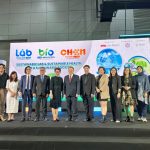
Research findings from a student thesis in the Master’s Programme in Food Science and Technology (MFST), Faculty of Agricultural Technology, Universitas Gadjah Mada (UGM), were featured as part of UGM’s presentation at the 14th ASEAN Food Safety Forum 2026. Held on 2 September 2026 at BITEC Bangna in Bangkok, Thailand, the forum addressed “Microplastics in Food: Emerging Risks and Food Safety Challenges.”

These preliminary findings came from thesis research by Faris Baha, supervised by Dr. Widiastuti Setyaningsih, S.T.P., M.Sc. as primary supervisor and Prof. Dr. rer. nat. Andhika Puspito Nugroho as co-supervisor. The findings were included in “Beyond the Plate: Microplastics in Indonesia’s Food System and ASEAN Food Safety Priorities”, a presentation prepared by Dr. Prieskarinda Lestari, S.T. and Dr. Widiastuti Setyaningsih, S.T.P., M.Sc.

Figure 1. Findings from UGM MFST student thesis research appear in the presentation at the 14th ASEAN Food Safety Forum 2026.

The study focuses on validating a method for analysing microplastics in Kappaphycus alvarezii, a seaweed with a carrageenan-rich matrix. The central question is how to break down the seaweed matrix for analysis while preserving the characteristics of the microplastic particles. The approach uses Fenton-assisted wet peroxide oxidation (WPO) to digest the matrix before particle examination and identification.

The preliminary results presented showed a matrix digestion efficiency of 97.1% following treatment at 40 °C with added Fe²⁺ for 72 hours. Tests involving the addition of polypropylene (PP) and high-density polyethylene (HDPE) particles achieved an observed recovery of 100%, meaning that all particles added in those tests were recovered.

The presentation also reported changes of less than 6% in morphological parameters, while polymer identity remained recognisable using Fourier-transform infrared spectroscopy (FTIR). However, oxidation indices increased after WPO treatment, particularly for PP. These findings highlight the importance of assessing recovery, morphology, polymer identity, and chemical changes together when validating an analytical method.

The research forms part of an ongoing master’s thesis. Application to field samples and final statistical interpretation are still in progress. The figures presented therefore describe preliminary validation results under specific test conditions and do not establish levels of microplastic contamination in field-collected seaweed.

This thesis research and its dissemination support SDG 4 (Quality Education) by strengthening student research skills, and SDG 9 (Industry, Innovation and Infrastructure) through the development of reliable analytical methods. Studying microplastics in seaweed also aligns with SDG 14 (Life Below Water) by expanding scientific knowledge and research capacity concerning marine resources. Sharing the findings at an ASEAN forum supports SDG 17 (Partnerships for the Goals) through international scientific knowledge exchange and the development of academic networks.
Tags: SDG 14: LIFE BELOW WATER SDG 17: PARTNERSHIPS FOR THE GOALS SDG 4: QUALITY EDUCATION SDG 9: INDUSTRY INNOVATION AND INFRASTRUCTURE

Leave A Comment Cancel reply

Your email address will not be published. Required fields are marked *

*

Related Posts

UGM MFST Explores Double Degree and Research Collaboration with Kasetsart University

MFST's News Monday, 14 September 2026

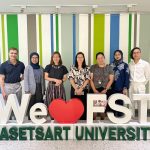
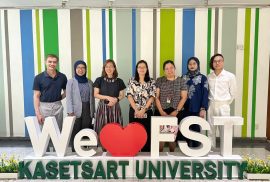
The Master’s Programme in Food Science and Technology (MFST), Faculty of Agricultural Technology, Universitas Gadjah Mada (UGM), visited Kasetsart University’s Bangkhen Campus in Bangkok, Thailand, on 3 September 2026.

UGM MFST Explores Research Collaboration and Student Mobility with Chulalongkorn University

MFST's News Monday, 14 September 2026

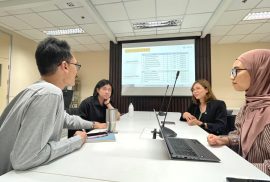
The Master’s Programme in Food Science and Technology (MFST), Faculty of Agricultural Technology, Universitas Gadjah Mada (UGM), visited the Department of Food Technology, Faculty of Science, Chulalongkorn University, in Bangkok, Thailand in September 1, 2026.

MFST UGM Reviews Student Research Progress Through Thesis Progress Seminar

MFST's News Tuesday, 18 August 2026

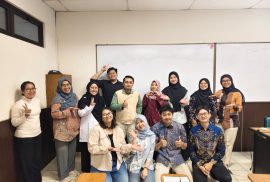
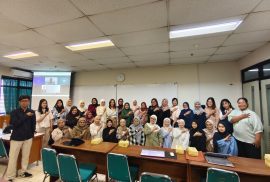
Yogyakarta – From students who are still collecting data to those already working on their theses and research manuscripts, 40 students from the Master’s Program in Food Science and Technology, Universitas Gadjah Mada (MFST UGM), presented the progress of their research during the Thesis Progress Seminar held on August 13-14, 2026.

The seminar gave students from the 2024 even-semester intake and earlier cohorts who are still completing their studies a chance to review their research progress, discuss challenges, and plan the next steps toward finishing their theses and scientific publications.

The event was held in a hybrid format in Rooms 504, 505, and 514 at the Faculty of Agricultural Technology UGM.

MFST UGM Welcomes 24 New Students for the 2026/2027 Odd Semester

MFST's News Tuesday, 18 August 2026

Yogyakarta – The Master’s Program in Food Science and Technology, Universitas Gadjah Mada (MFST UGM), welcomed its new students for the 2026/2027 odd semester on Thursday, August 13, 2026, at the Faculty of Agricultural Technology UGM.

MFST News

  • UGM MFST Explores Double Degree and Research Collaboration with Kasetsart University
  • UGM MFST Student Thesis Findings Featured at the ASEAN Food Safety Forum 2026
  • UGM MFST Explores Research Collaboration and Student Mobility with Chulalongkorn University
  • MFST UGM Reviews Student Research Progress Through Thesis Progress Seminar
  • MFST UGM Welcomes 24 New Students for the 2026/2027 Odd Semester

UGM Updates

  • UGM’s Youngest Doctoral Graduate Advances Native Chicken Genetics
  • UGM and NTU Host ASEAN Summer School on Renewable Energy and Smart Cities
  • Black Aromatic Ginger and Gotu Kola: UGM Study Finds Potential Herbal Therapy for Optic Nerve Inflammation
  • UGM Researcher Finds Potential Antioxidant and Antihypertensive Benefits in Goat and Sheep Skin Collagen
Universitas Gadjah Mada

Master in Food Science and Technology

Department of Food and Agricultural Products Technology

Faculty of Agricultural Technology

Universitas Gadjah Mada

Jl. Flora 1 Bulaksumur Yogyakarta 55281 INDONESIA

Phone: (0274) 544716

Email: pasca_ftpugm@ugm.ac.id

ALTERNATIVE LINK

UGM Research

UGM Service and Dedication

Department TPHP

JOURNAL RESEARCH

Agritech

Food Science

Perpusnas

Science Direct

Scopus

Willey Online Library

ACCREDITATION

© Universitas Gadjah Mada