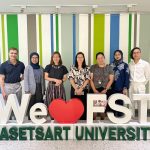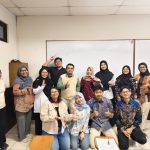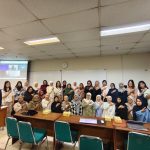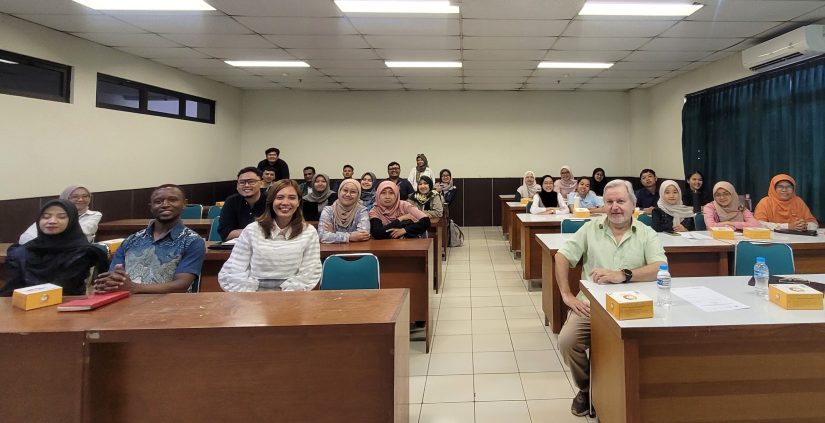
The Master Program in Food Science and Technology (MFST), Department of Food and Agricultural Product Technology, Faculty of Agricultural Technology, Universitas Gadjah Mada, hosted Prof. Eduardo Cortón from the University of Buenos Aires (UBA), Argentina, for a series of academic activities comprising a guest lecture and a workshop on 20-21 Juli 2026. The activities provided postgraduate students with an opportunity to broaden their knowledge of recent developments in biosensors, bioanalysis, and electrochemical methods, as well as their applications in developing simple and practical analytical tehcnologies.
Integrating Electrochemistry and Biology to Develop Technological Solutions
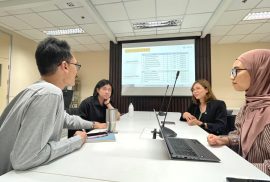
The series began with a guest lecture entitled “New Biosensors and Other Bio-Analytical Methods to Develop Technological Solutions by Merging Electrochemistry and Biology” on Monday, 20 July 2026, in Room 514, Faculty of Agricultural Technology, UGM.
The lecture was open to students from the Master Program in Food Science and Technology (MFST), Master Program in Estate Crop Product Technology (MECPT), and Doctoral Program in Food Science (DFS).
The guest lecture was officially opened by Dr. Arima Diah Setiowati, S.T.P., M.Sc., Secretary of DFS, on behalf of the management of the graduate programs, and moderated by Dr. Widiastuti Setyaningsih, S.T.P., M.Sc.
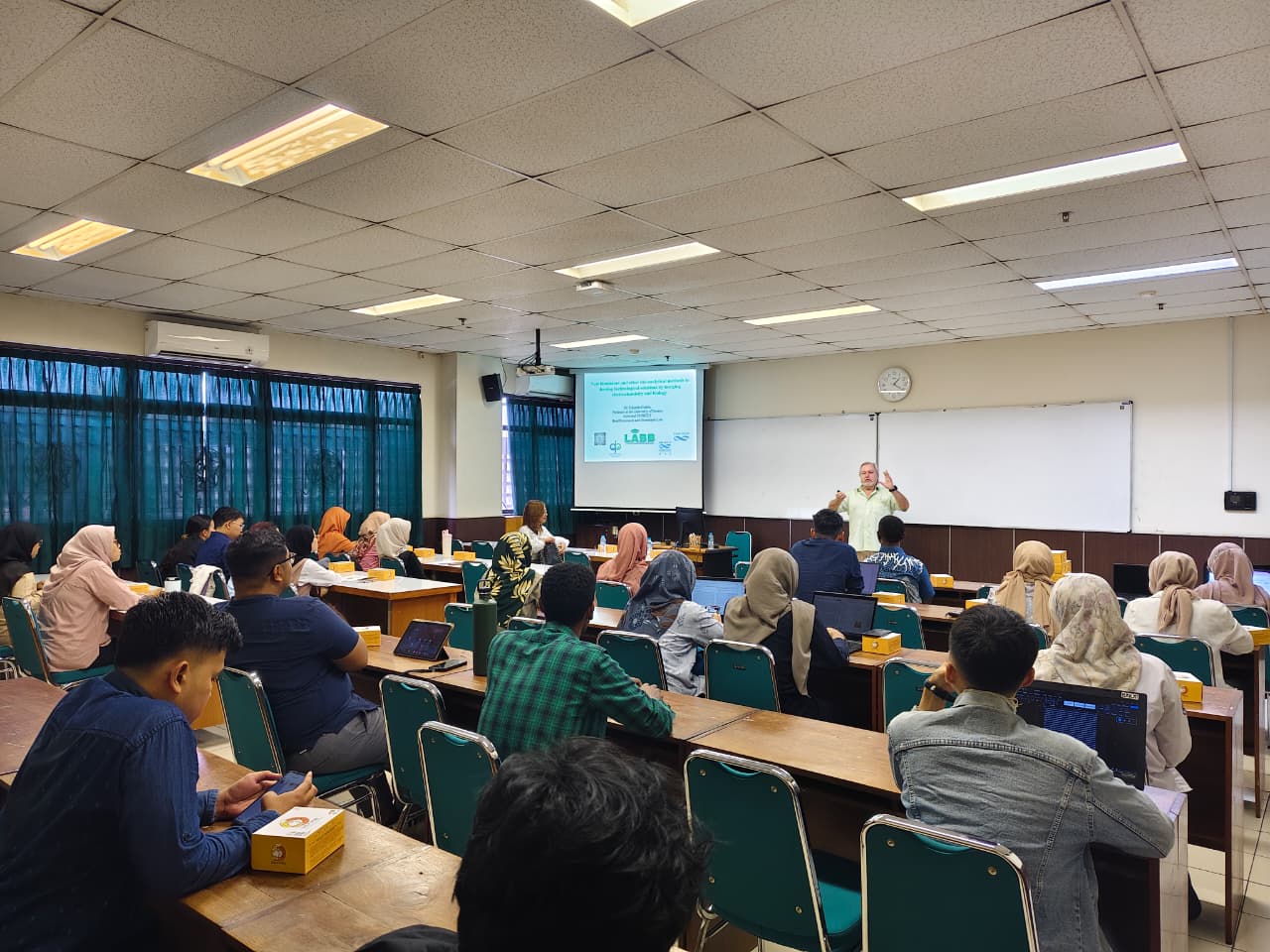 During his presentation, Prof. Cortón introduced the fundamental principles of bioelectrochemistry and biosensors. He demonstrated how integrating biological systems with electrochemical techniques can generate a wide range of analytical and technological solutions. His research group at the Biosensors and Bioanalysis Laboratory develops biosensors using various biological elements, including microorganisms, enzymes, antibodies, and DNA.
The lecture covered enzymatic and microbial biosensors, microbial fuel cells (MFCs), microfluidic devices, new electrode materials, and the development of point-of-care and point-of-need devices. These approaches have a wide range of potential applications, including medical diagnostics, water-quality and environmental monitoring, precision agriculture, and other analytical purposes. Prof. Cortón’s research group has a strong orientation toward developing products and technological solutions based on bioelectrochemistry.
One particularly interesting topic was the use of microbial fuel cells as biosensors for monitoring microbial metabolic activity. Prof. Cortón explained how his research group has developed this bioelectrochemical principle as an approach to detecting metabolic processes, with potential applications in the search for signs of life beyond Earth.
The development of increasingly simple and portable analytical methods was also an important part of the lecture. One example presented was a method for microplastic analysis using a smartphone camera and image analysis. This innovation demonstrated the potential to combine widely accessible technology with modern bioanalytical methods.
In the field of food science, Prof. Cortón presented the development of sensors and process-control systems for wine production. A polyphenol-fingerprinting approach combined with microfluidic devices and artificial intelligence has been developed to support wine classification, adulteration detection, automated quality control, and the production of more reproducible blends.
Workshop on Polyphenol Analysis Using Disposable Carbon Electrodes
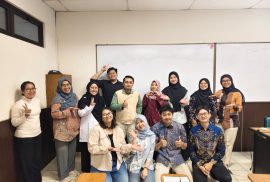
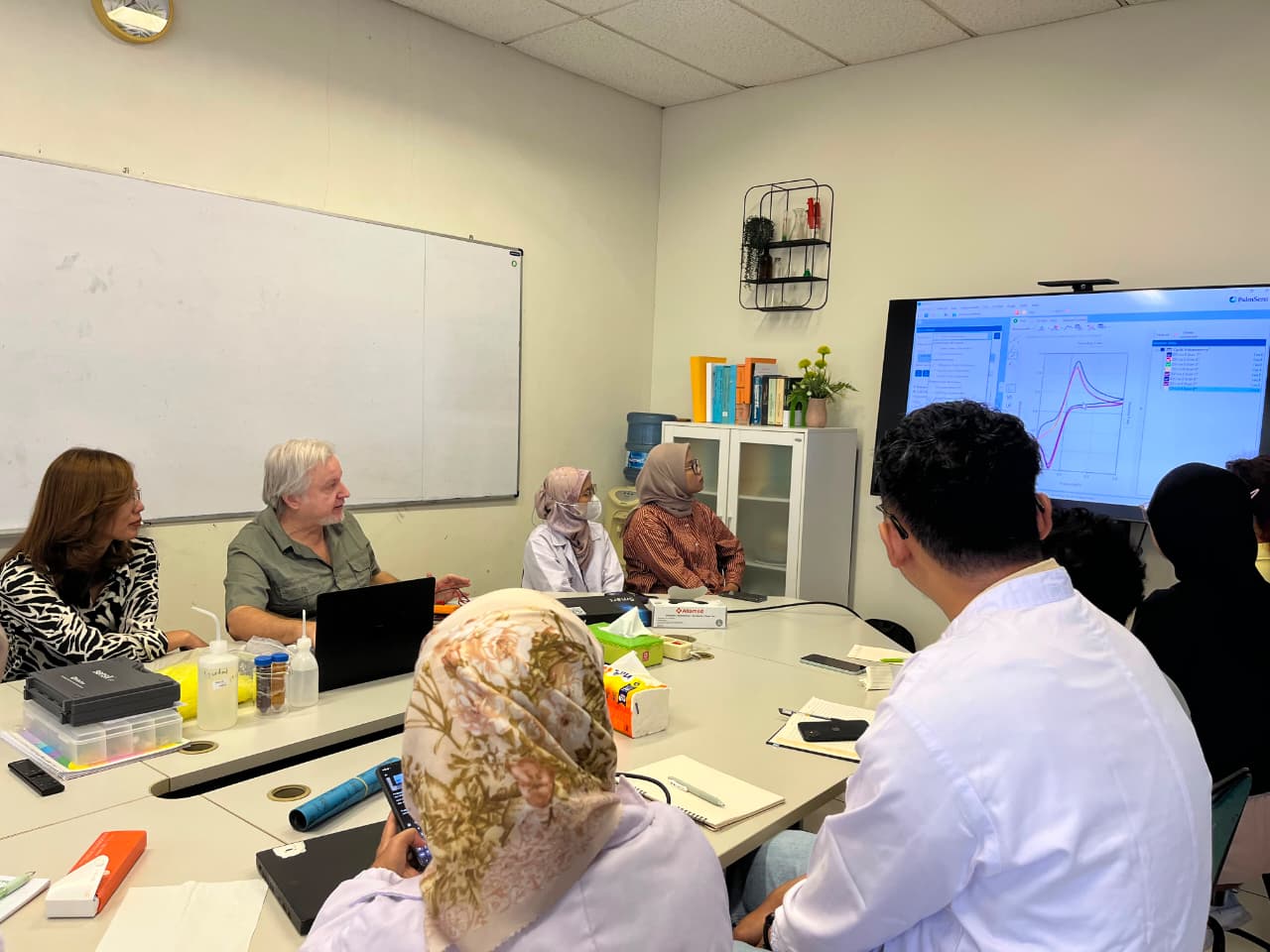 The series continued on Tuesday, 21 July 2026, with a workshop entitled “Electrochemical Determination of Polyphenols Using Disposable Carbon Electrodes: Toward Simple Point-of-Need Analytical Devices,” held at the Chemistry and Biochemistry of Food and Agricultural Product Technology Laboratory, Department of Food and Agricultural Product Technology, Faculty of Agricultural Technology, UGM.
The workshop was open to postgraduate students from MFST, MECPT, and DFS. While the guest lecture on the previous day provided a conceptual foundation and a broad overview of developments in biosensors and bioanalysis, the workshop gave participants an opportunity to gain a closer understanding of the application of electrochemical methods to the analysis of food compounds.
The use of disposable carbon electrodes provided valuable insight into how analytical methods can be developed to become simpler, faster, and more portable, with the potential for direct application at the measurement site or point of need. This approach is particularly relevant to the development of food-analysis methods that consider not only analytical performance but also ease of implementation, accessibility, and efficiency.
Strengthening the International Academic Environment
Prof. Eduardo Cortón is a professor at the University of Buenos Aires and a researcher at CONICET, the National Scientific and Technical Research Council of Argentina. He also leads the Biosensors and Bioanalysis Laboratory. His areas of expertise primarily include bioelectrochemistry and the development of biosensors and bioanalytical methods for technological applications.
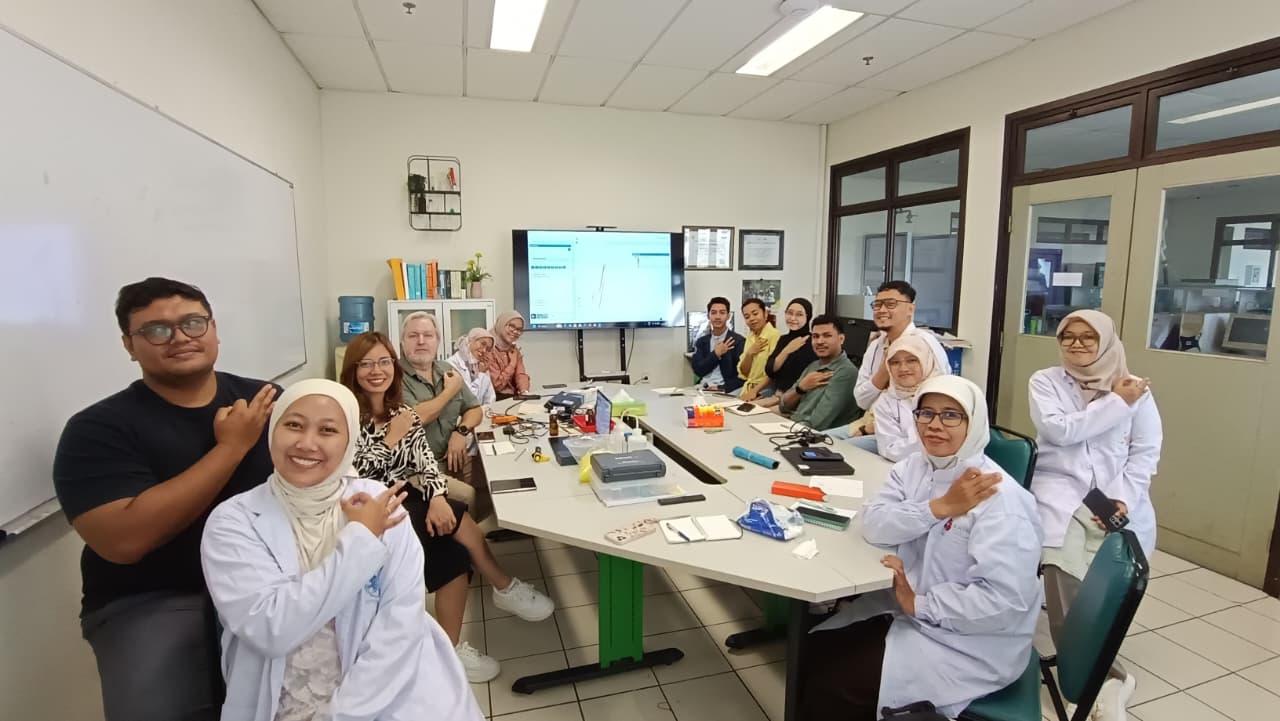 Prof. Cortón’s visit provided MFST students and students from other graduate programs within the Department of Food and Agricultural Product Technology with an opportunity to interact directly with an international researcher. It also enabled them to gain new perspectives on the development of analytical methods, from their fundamental principles to their practical applications.
This activity forms part of MFST UGM’s efforts to strengthen its international academic environment and advance the internationalization of education while broadening students’ knowledge of recent developments in advanced analytical technologies. The integration of analytical chemistry, electrochemistry, biology, materials science, device miniaturization, and data analysis demonstrates that addressing future challenges in food science increasingly requires a multidisciplinary approach.
Through this international guest lecture and workshop, students are expected to gain inspiration to develop research ideas that are more innovative, applicable, and collaborative. The series of activities with Prof. Eduardo Cortón also created opportunities to strengthen academic networks and explore future collaboration among Universitas Gadjah Mada, the University of Buenos Aires, and CONICET, Argentina, particularly in the development of analytical methods, biosensors, and bioanalytical technologies.