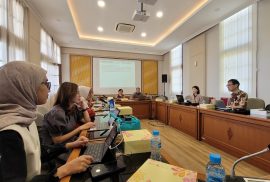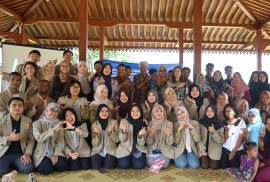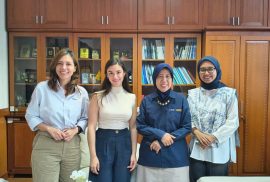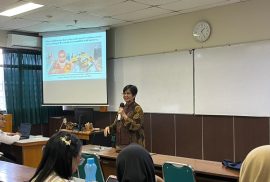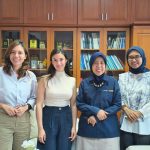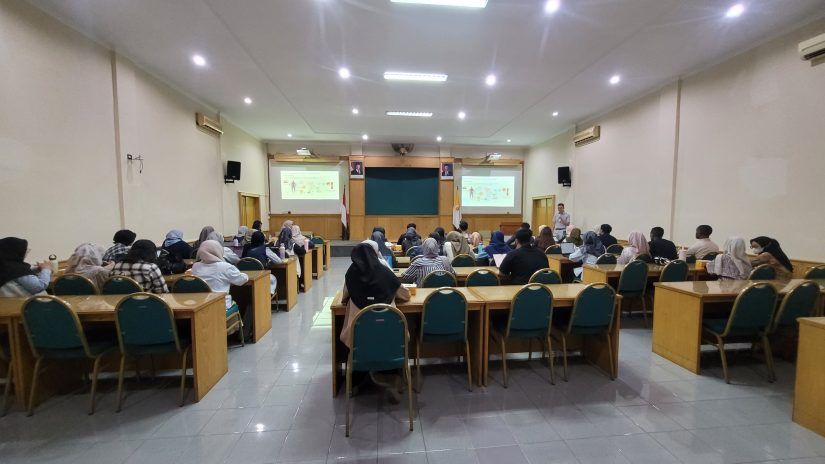
Yogyakarta, July 1, 2026 — The Master’s Program in Food Science and Technology, Department of Food and Agricultural Product Technology, Faculty of Agricultural Technology, Universitas Gadjah Mada, held a guest lecture entitled “Thesis Proposal Writing and Publishing Success: A Practical Guide from Research Gap to Publishable Manuscript with a Case Study on Bioactive Compounds for Acute Metabolic Syndrome.” The event was held on Wednesday, July 1, 2026, from 1:00 to 3:00 p.m. WIB at Room 384, Faculty of Agricultural Technology, UGM.
The guest lecture featured Prof. Jae-Young Je from Pukyong National University, South Korea, as the invited speaker. Prof. Je is an academic and researcher in the field of Human Bioconvergence, with expertise in bioactive compounds, particularly peptides, polysaccharides, polyphenols, and the development of marine bioresources-based functional materials for health.
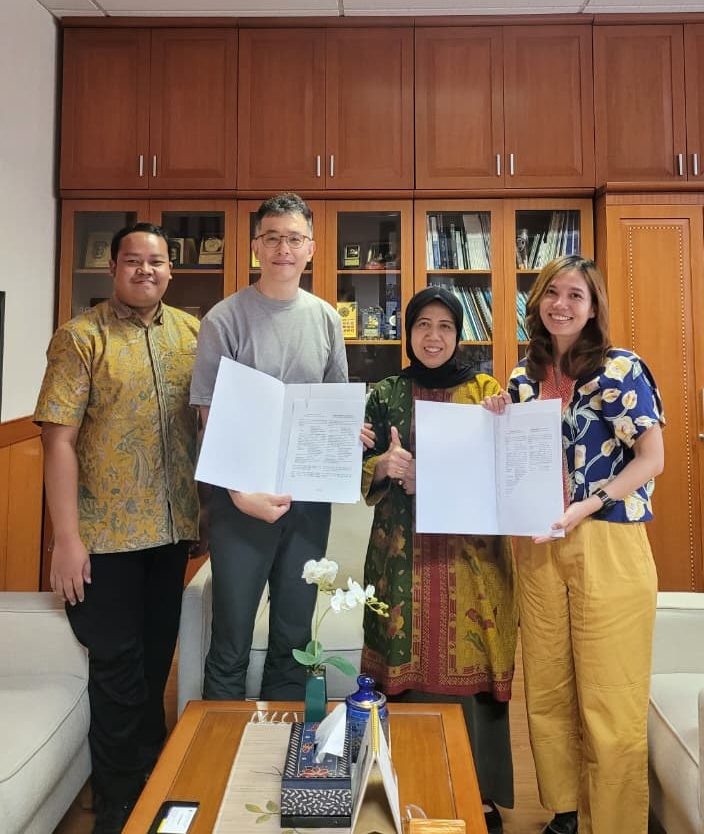 This activity was part of the Top Visiting Professor program, also referred to as Visiting (Inviting) Top Professors, under the 2025/2026 WCU Equity Program supported by LPDP and Kemdiktisaintek, implemented by the Faculty of Agricultural Technology, Universitas Gadjah Mada. The program aims to strengthen international academic collaboration, particularly between UGM and Pukyong National University, in the areas of functional foods, bioactivity of bioactive compounds, and internationally reputable research.
The session was moderated by Dr. Widiastuti Setyaningsih, S.T.P., M.Sc., a lecturer at the Department of Food and Agricultural Product Technology, Faculty of Agricultural Technology, UGM, who also serves as the coordinator of the Top Visiting Professor grant activity. Through this guest lecture, graduate students had the opportunity to engage directly with an international expert on thesis proposal development, research gap identification, methodological design, and the transformation of research findings into publishable scientific manuscripts.
In his presentation, Prof. Je emphasized that a strong thesis proposal should not merely begin with an interesting topic, but must be built upon a clear research gap. According to him, a thesis proposal should answer four essential questions: what, why, how, and feasible. These aspects cover the scope of the research, its scientific and practical significance, the appropriateness of the methodology, and the feasibility of the study in terms of time, facilities, resources, and supporting data.
Prof. Je also explained that students need to select research topics strategically. A good topic should not be too broad, too general, or already well resolved. In the context of a master’s thesis, the research topic should be realistic to complete within the study period while still having the potential to be developed into a scientific publication.
One important part of the lecture focused on how to identify and formulate a research gap. Prof. Je introduced a stepwise approach from current knowledge, limitations in current studies, the unanswered gap, to the proposed study. This approach helps students build a more systematic line of reasoning, ensuring that their research not only addresses an academic question but also contributes meaningfully to scientific development and societal needs.
As a case study, Prof. Je presented the potential of marine bioactive compounds in addressing metabolic disorders, including obesity, diabetes, and metabolic syndrome. One example discussed was the utilization of Sargassum fulvellum, a brown seaweed that has long been consumed as a traditional food and is known to possess antioxidant and anti-inflammatory potential. Through this example, participants were invited to understand how traditional knowledge, marine biodiversity, experimental design, and molecular mechanism analysis can be integrated into a strong and publishable research framework.
Prof. Je further highlighted that strong research should be supported by multiple lines of scientific evidence. In the case study presented, the research approach may include extract screening, enzymatic activity assays, cell-based models, animal models, and in silico analysis to understand possible molecular mechanisms. This stepwise approach demonstrates the importance of robust methodological design to ensure that research findings can be scientifically justified.
In addition to thesis proposal development, the guest lecture also addressed scientific publication strategies. Prof. Je stressed that publication should not be considered only after the research is completed, but should be planned from the beginning. Students need to consider a research gap that is novel yet feasible, select an appropriate target journal, design methods with adequate controls and replications, and be prepared for the revision and resubmission process.
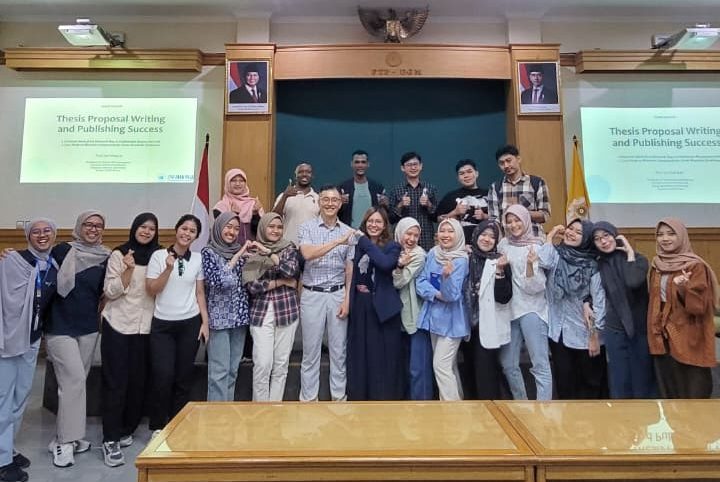 Through this activity, S2 ITP UGM students are expected to gain a stronger understanding that a thesis can serve as an initial step toward broader scientific contribution. A well-developed thesis proposal can become the foundation for a high-quality publication, particularly when supported by clear research questions, appropriate methodology, and strong scientific argumentation.
This guest lecture is also aligned with the objectives of the Top Visiting Professor grant, namely to strengthen international research networks, enhance human resource capacity, support the development of reputable scientific manuscripts, and encourage sustainable academic collaboration between UGM and international partners. In a broader context, this activity contributes to the advancement of functional foods based on bioactive compounds and the sustainable utilization of biological resources.
The guest lecture with Prof. Jae-Young Je is expected to further strengthen the academic atmosphere within S2 ITP UGM, encourage students to become more confident in preparing their thesis proposals, and open up opportunities for international research collaboration in the fields of functional foods, bioactivity of natural compounds, and metabolic health.