Integrating learning, research, and community engagement is one of the key commitments of the Master’s Program in Food Science and Technology (MFST), Faculty of Agricultural Technology, Universitas Gadjah Mada. This commitment was realized through a community engagement activity held on Thursday, 2 July 2026, in Gunung Gambar Hamlet, Ngawen Subdistrict, Gunungkidul Regency, involving third-semester master’s students as part of contextual field-based learning.
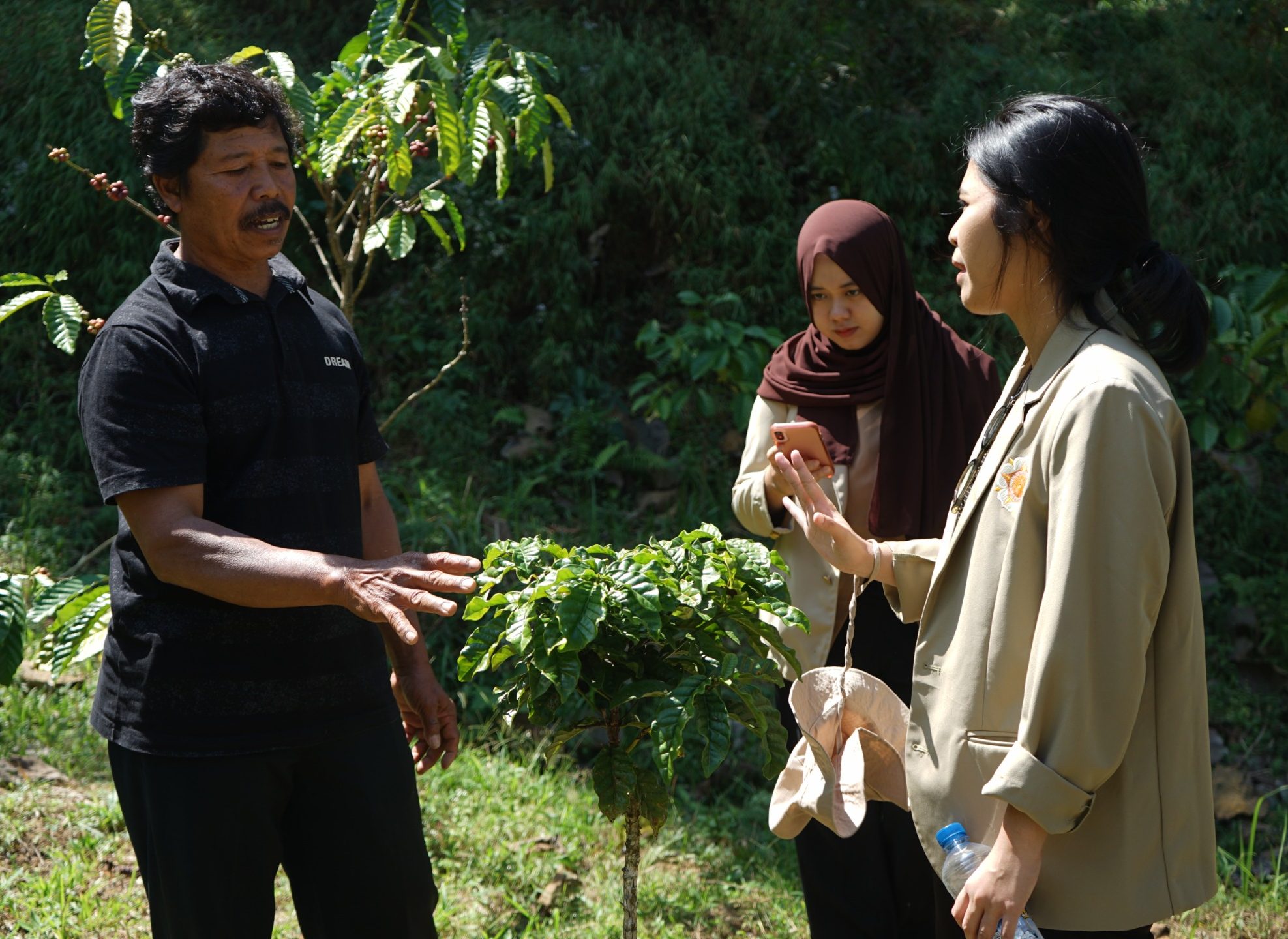
Gunung Gambar is one of the areas with strong potential for Robusta coffee development. Its favorable agroecological conditions support coffee with distinctive sensory characteristics. However, this potential is still challenged by postharvest issues, particularly raw material handling, drying, and processing practices, which strongly influence coffee quality and consistency.
The activity was guided by Dr. Qurrotul A’yun, S.T.P., M.Sc. as the Secretary of the Master’s Program in Food Science and Technology. The event opened with remarks from Mr. Sulasna, Head of the Gunung Gambar Young Coffee Farmers Group, followed by remarks from Dr. Widiastuti Setyaningsih, S.T.P., M.Sc., Head of the Master’s Program in Food Science and Technology. In her remarks, Dr. Widiastuti emphasized that community engagement is not only intended to provide solutions for local partners, but also to serve as a learning platform for students to understand real challenges faced by the community.
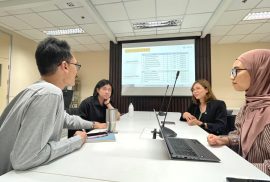
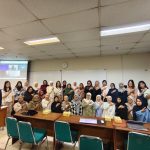
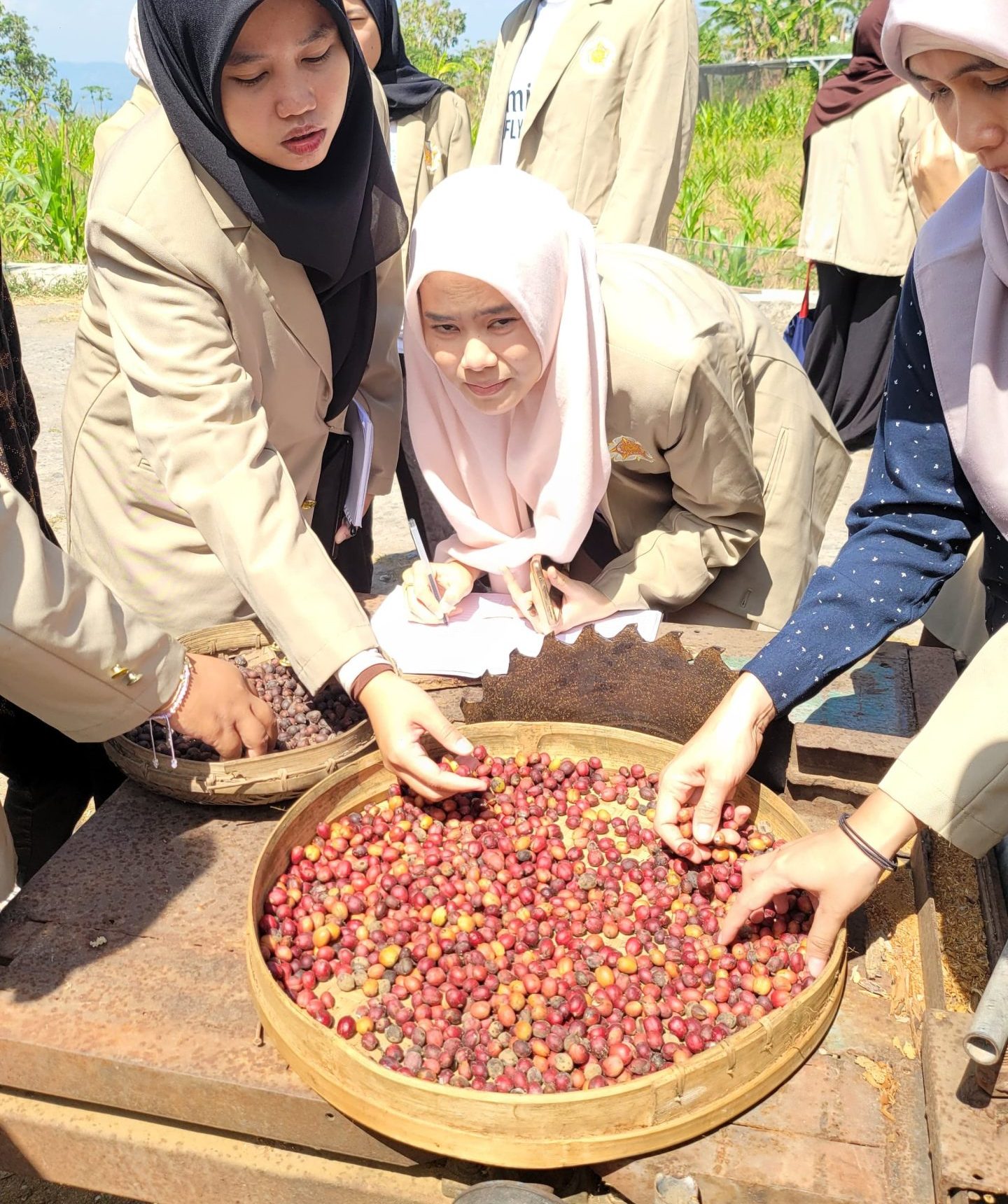
 The main session on coffee postharvest handling and processing was delivered by Dian Anggraini Suroto, S.T.P., M.P., M.Eng., Ph.D. In her presentation, she highlighted the importance of controlling each postharvest stage to maintain coffee quality, from cherry handling and drying to appropriate processing methods that preserve and enhance the sensory characteristics of coffee.
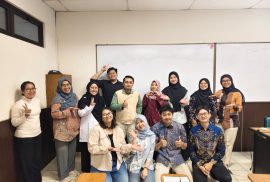
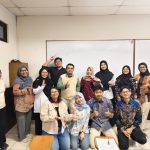
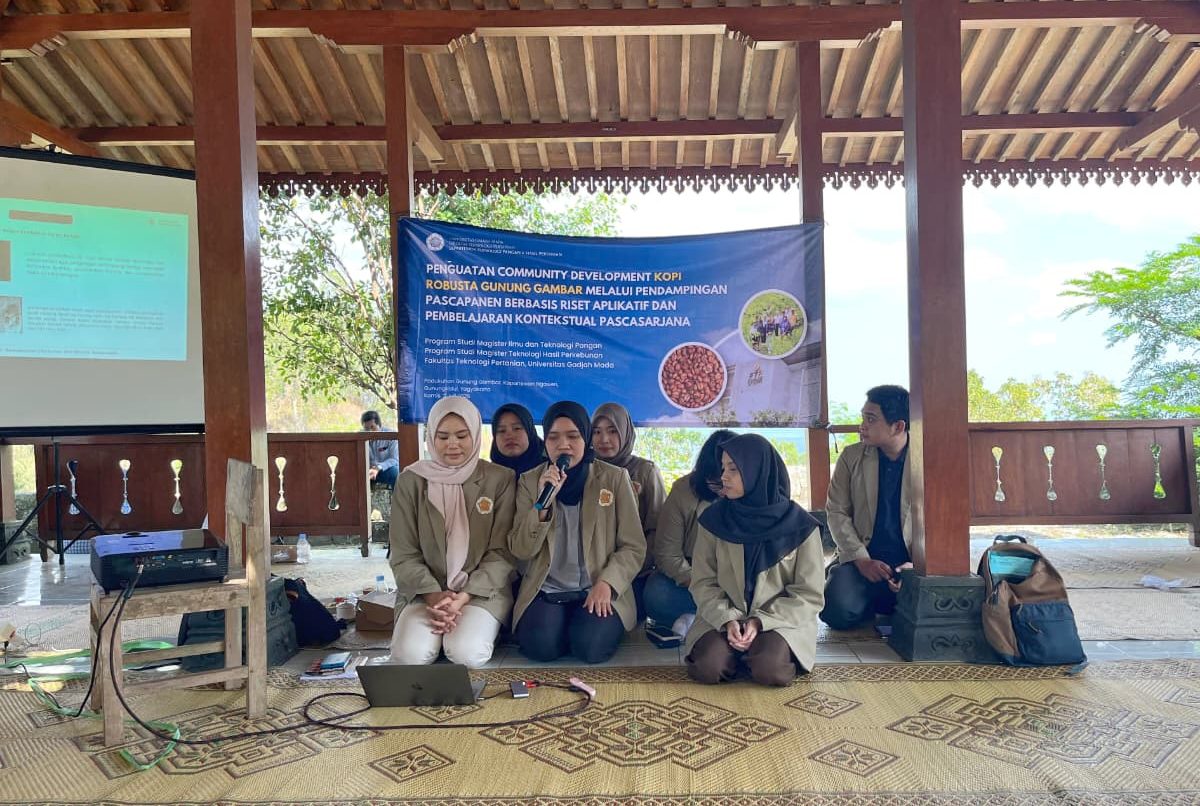
Beyond the classroom-style session, students also conducted field observations in coffee plantations and processing sites. The students were divided into three groups to identify existing conditions, interact with the local community, and formulate improvement opportunities based on food science and technology approaches. Each group then presented its observations and recommendations to lecturers and community members as part of a shared discussion on practical solutions.
The activity concluded with a wrap-up session by Prof. Dr. Ir. Supriyadi, M.Sc., who emphasized the importance of maintaining coffee quality from cultivation to postharvest handling. He also encouraged students to strengthen their analytical and critical thinking skills in developing solutions that are not only theoretically sound, but also aligned with local conditions and community potential.
 Through this activity, MFST UGM demonstrated that community engagement can serve as an effective learning platform for postgraduate students. Direct field-based learning is expected to strengthen students’ ability to integrate scientific knowledge, research outcomes, and community needs, while supporting the development of Gunung Gambar Robusta coffee as one of the region’s promising local commodities.
As part of an experiential learning approach, this activity is expected to become an initial step toward sustainable collaboration between MFST UGM and the Gunung Gambar community in improving the quality, added value, and competitiveness of local Robusta coffee through a science-based and research-driven approach.