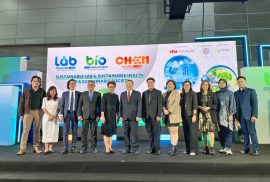
Two students from the Master’s Programme in Food Science and Technology at Universitas Gadjah Mada (UGM), Evelyn Gabriella Suliantoro and Husnul Wati, represented Indonesia and UGM at the FAO Global Conference for Actions on One Health in Agrifood Systems, held at the Food and Agriculture Organization (FAO) Headquarters in Rome, Italy, from 21 to 23 September 2026. The conference brought together academics, researchers, practitioners, and stakeholders from around the world to discuss ways to advance the One Health approach across agrifood systems.
Their participation followed their win in the Sustainable Livestock Transformation Research and Innovation Competition for Young Scientists, which was part of the International Strategic Meeting on Scientific Pathways for Sustainable Livestock Industry Transformation held in Jakarta in March 2026. The event was jointly organised by the Food and Agriculture Organization (FAO) and Indonesia’s National Research and Innovation Agency (BRIN). As competition winners, Evelyn and Husnul received full funding to attend the conference in Rome, where they presented their ideas and joined discussions with international participants.
At the conference, Evelyn and Husnul presented an innovative idea developed under the supervision of Prof. Dr. Ir. Supriyadi, M.Sc. Their presentation formed part of broader discussions on the application of the One Health approach to support healthier and more sustainable agrifood systems by recognising the close connections between human, animal, plant, and ecosystem health.

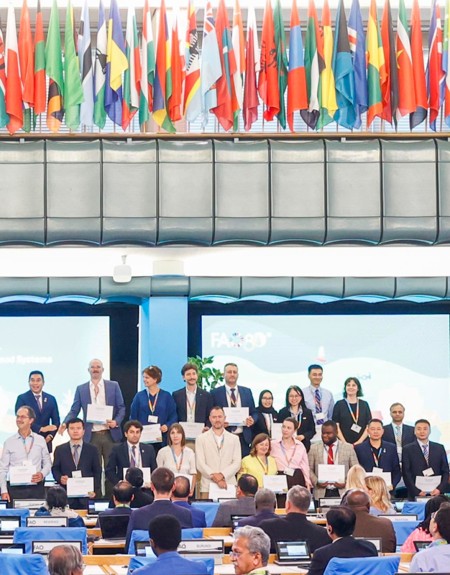
Throughout the three-day conference, the two students took part in plenary sessions, panel discussions, and multi-stakeholder dialogues. On the first day, they joined a plenary session entitled “Healthy Production Systems for Healthy People, Animals, Plants and Ecosystems,” which explored the links between production systems, food safety, nutrition, and health.
On the second day, the discussions focused on ecosystem resilience, including agricultural and health interventions tailored to local ecosystems and production systems. The sessions also addressed the role of data-driven prevention through integrated surveillance and early-warning systems, including the monitoring of pathogens and antimicrobial resistance (AMR) in wastewater.
Beyond the conference programme, Evelyn and Husnul met with the Indonesian Ambassador to Italy, Prof. Dr. Junimart Girsang, and several Indonesian diplomats. During the discussion, they gained insights into the role of young scholars and researchers in strengthening Indonesia’s contribution to science, innovation, and international engagement.
 Their participation in this global scientific forum reflects the Master’s Programme in Food Science and Technology’s commitment to encouraging students to engage with international academic networks and contribute science-based ideas to real-world challenges. Experiences such as this allow students to broaden their academic perspectives while gaining a deeper understanding of the links between food science, health, sustainability, and global agrifood systems.
Their involvement also aligns with several Sustainable Development Goals (SDGs), particularly SDG 2: Zero Hunger, through contributions to safer, healthier, and more sustainable food systems; SDG 9: Industry, Innovation and Infrastructure, through the promotion of science-based innovation with potential applications in the food industry; and SDG 12: Responsible Consumption and Production, through efforts to improve food-system efficiency, reduce food loss and waste, and promote more responsible and environmentally conscious use of technology.