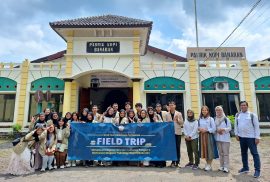
Semarang, October 27, 2025 – Graduate students from the Master’s Program in Food Science and Technology (MFST) and the Master’s Programme in Estate Crop Product Technology (MECPT), Faculty of Agricultural Technology, Universitas Gadjah Mada, conducted an industrial visit to PT Indofood CBP Sukses Makmur Tbk. Noodle Division and PT Industri Jamu dan Farmasi Sido Muncul Tbk. in Semarang, Central Java. The visit was attended by 21 MFST students and 6 MECPT students, accompanied by 10 lecturers and 2 academic staff from the Faculty of Agricultural Technology, UGM.
This activity aimed to broaden students’ understanding of the implementation of food science and technology, as well as estate crop product technology, at the industrial scale through direct observation of production processes. In addition, it sought to inspire students’ creativity in identifying research and innovation opportunities, as well as to strengthen collaboration between academia and industry in the fields of research, development, and education.
The visit began with welcoming remarks from both the university and company representatives, followed by a factory tour where students observed the production process firsthand, from raw material preparation to product packaging. Participants also watched company profile and safety induction videos, and engaged in a discussion and Q&A session with company representatives.
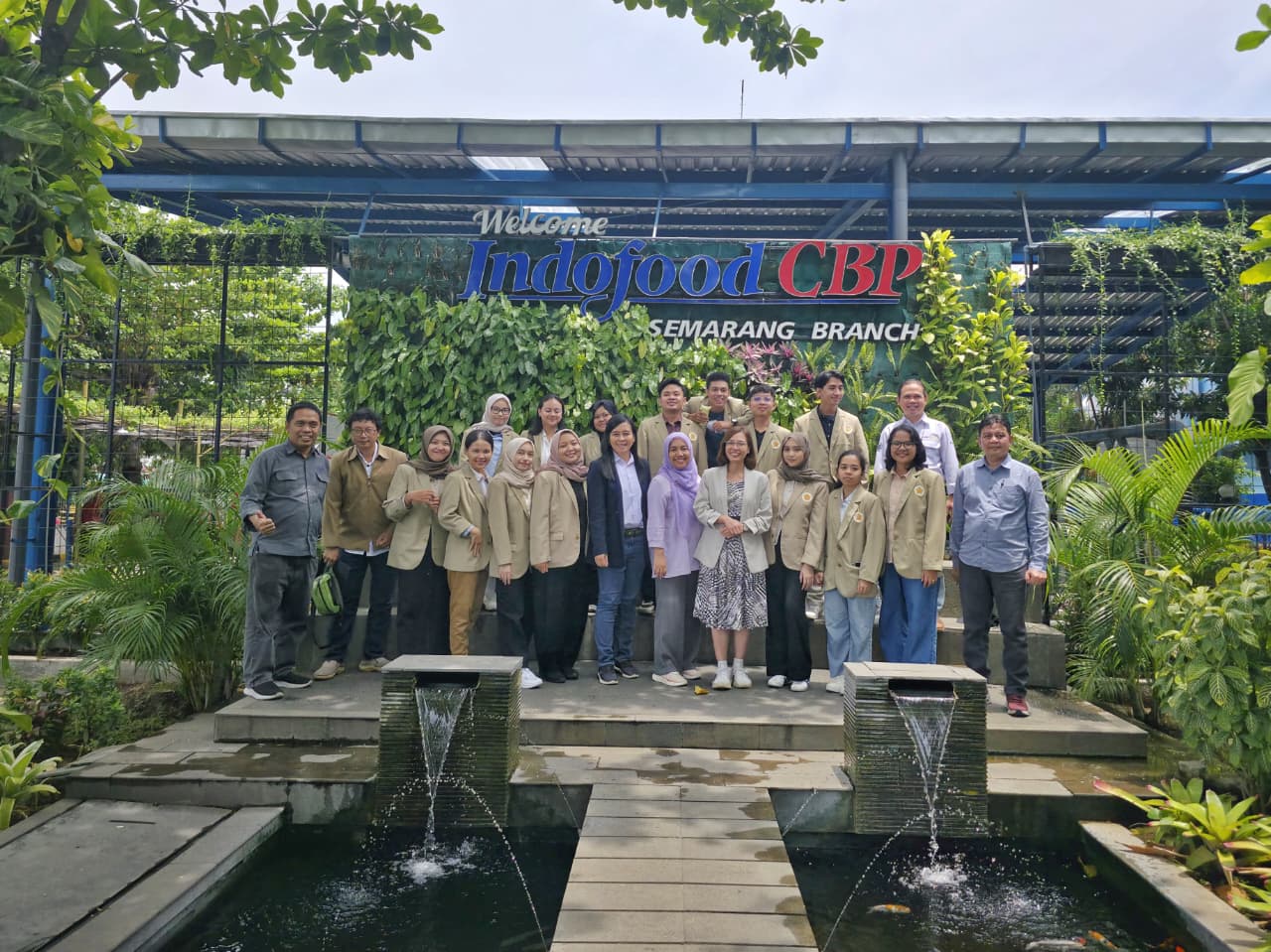
At PT Indofood CBP Sukses Makmur Tbk., students observed the instant noodle production process to gain insights into the application of occupational health and safety (OHS) standards, quality control systems, and corporate social responsibility (CSR) programs. Under the company’s supervision, students learned how each stage of production is carried out in an integrated and continuous manner to ensure safe and high-quality products.
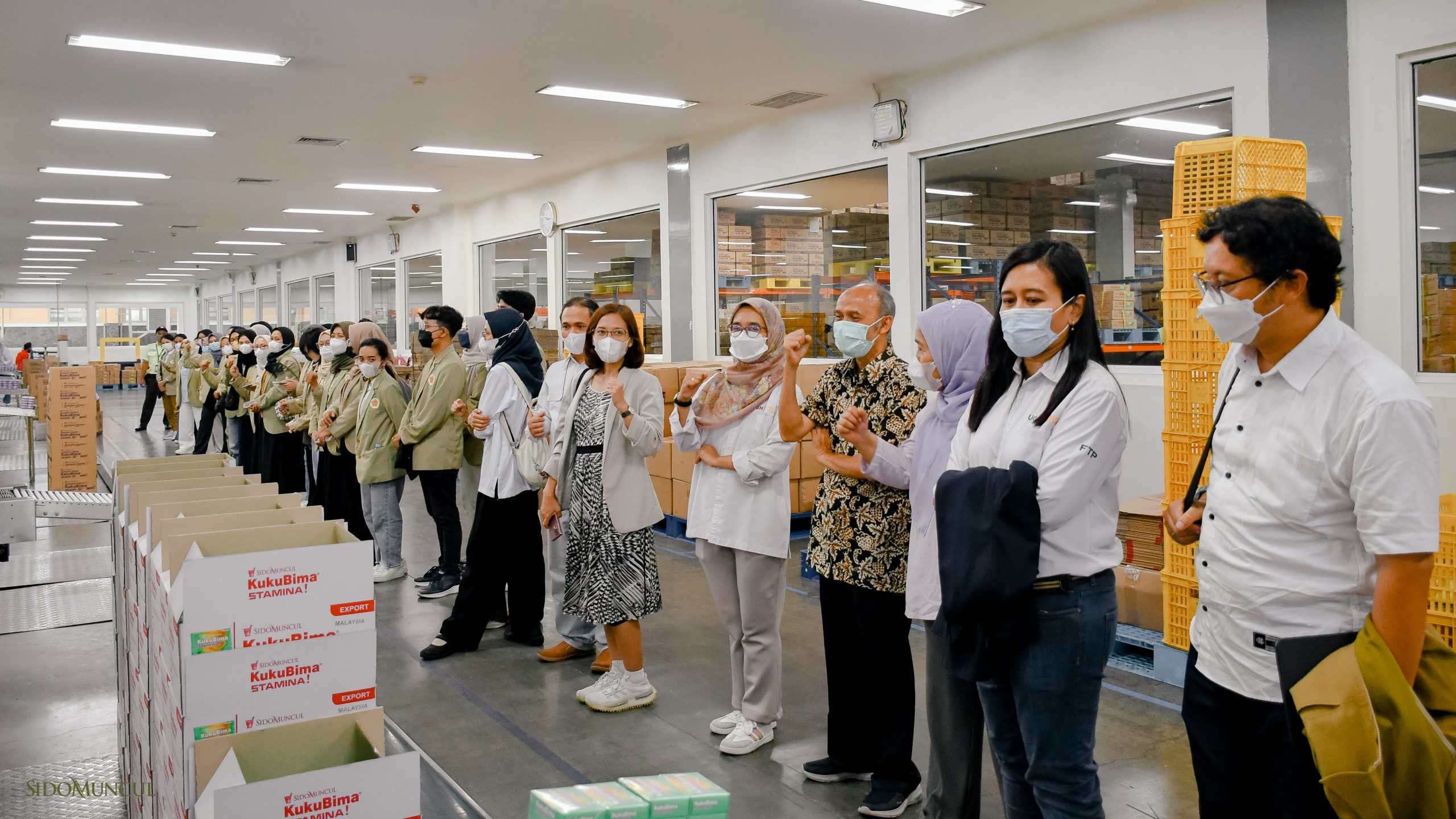 Meanwhile, the visit to PT Industri Jamu dan Farmasi Sido Muncul Tbk. offered students a different perspective by showcasing the company’s production flow, quality standards, and commitment to innovation and sustainability. Students were introduced to various production units, including the modern herbal medicine plant, traditional jamu plant, powdered drink factory, ready-to-drink beverage facility, and raw material and finished product warehouses. They also had the opportunity to observe activities at the Research and Development (R&D) Center from outside the laboratory, where they learned that the R&D team consistently develops at least eight new products every year as part of the company’s innovation initiatives.
Through this industrial visit, students gained a comprehensive understanding of the production chains of processed food and modern herbal products, from raw material handling and quality management systems to product distribution. This activity also serves as a bridge between classroom theories and real-world industrial practices, while reflecting the commitment of the MFST and MECPT Programmes to supporting the achievement of the Sustainable Development Goals (SDGs), particularly SDG 4 (Quality Education), SDG 8 (Decent Work and Economic Growth), and SDG 9 (Industry, Innovation, and Infrastructure), by strengthening collaboration between academia and industry to promote sustainable innovation in the food and plantation product sectors.