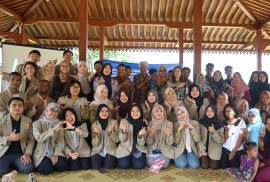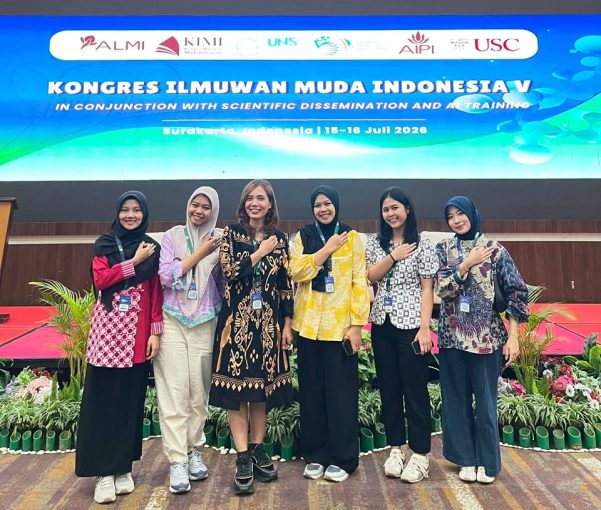
Surakarta – Five students from the Master’s Program in Food Science and Technology (MFST), Faculty of Agricultural Technology, Universitas Gadjah Mada (UGM), participated in the Fifth Congress of Indonesian Young Scientists (KIMI V) 2026, held on 15-15 July 2026 at Universitas Sebelas Maret (UNS), Surakarta.
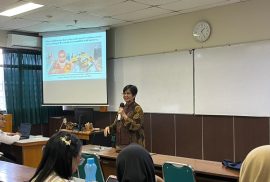
Organized by the Indonesian Young Academy of Sciences (Akademi Ilmuwan Muda Indonesia/ALMI), the congress brought together young scientists, senior researchers, industry representatives, and other stakeholders to strengthen collaboration and facilitate the translation of scientific findings into practical benefits for industry and society. The program included scientific lectures, panel discussions, parallel workshops, poster presentations, joint recommendation drafting, and training on the application of artificial intelligence in research.
The five MFST students were Erina Wulandari, Aprilia Elok K. H., Btari Naura K., Berliana Minatus Sania, and Ilmania Syavitri. Divided into two teams, they presented research under two strategic themes: Health and Biotechnology and Food Security, Energy, and Environment. Both research projects were supervised by Wahyu Dwi Saputra, S.T.P., M.Agr.Sc., Ph.D.
 The first team presented a study on the reduction of antinutritional compounds in sacha inchi oil cake through solid-state fermentation. The study demonstrated how fermentation technology can be applied to improve the functional value of agricultural by-products. This approach offers an innovative pathway for converting underutilized biological resources into more nutritious and sustainable food ingredients.
The second team presented a study entitled “Germination-induced Changes in Fatty Acid, Amino Acid, and Bioactive Compound Profiles of Indonesian Cempo Ireng Black Rice.” The research examined changes in fatty acids, amino acids, and bioactive compounds in the Indonesian black rice variety Cempo Ireng following germination. The findings indicated that germination has the potential to enhance the nutritional quality and bioactive compound content of Cempo Ireng black rice.
 The study highlights the potential of Indonesian local commodities as raw materials for value-added functional foods. Such research may contribute to food security by increasing the nutritional and economic value of national agricultural products while supporting the sustainable utilization of Indonesia’s biodiversity.
The students were also accompanied by Dr. Widiastuti Setyaningsih, Head of the MFST Program and a member of ALMI. In addition to supporting the students during the congress, she contributed to the event as a Master of Ceremony in one of the KIMI V sessions.
The participation of MFST UGM students in KIMI V 2026 reflects the program’s commitment to promoting research that extends beyond scientific publication and contributes to solving challenges related to health, food, and sustainability. The congress also provided students with opportunities to strengthen their scientific communication skills, receive input from experts, build research networks, and explore future interdisciplinary collaborations.
Through these research contributions, MFST UGM continues to encourage science-based innovations that address societal needs and support the Sustainable Development Goals (SDGs), particularly SDG 2: Zero Hunger, SDG 3: Good Health and Well-being, SDG 9: Industry, Innovation and Infrastructure, and SDG 12: Responsible Consumption and Production.